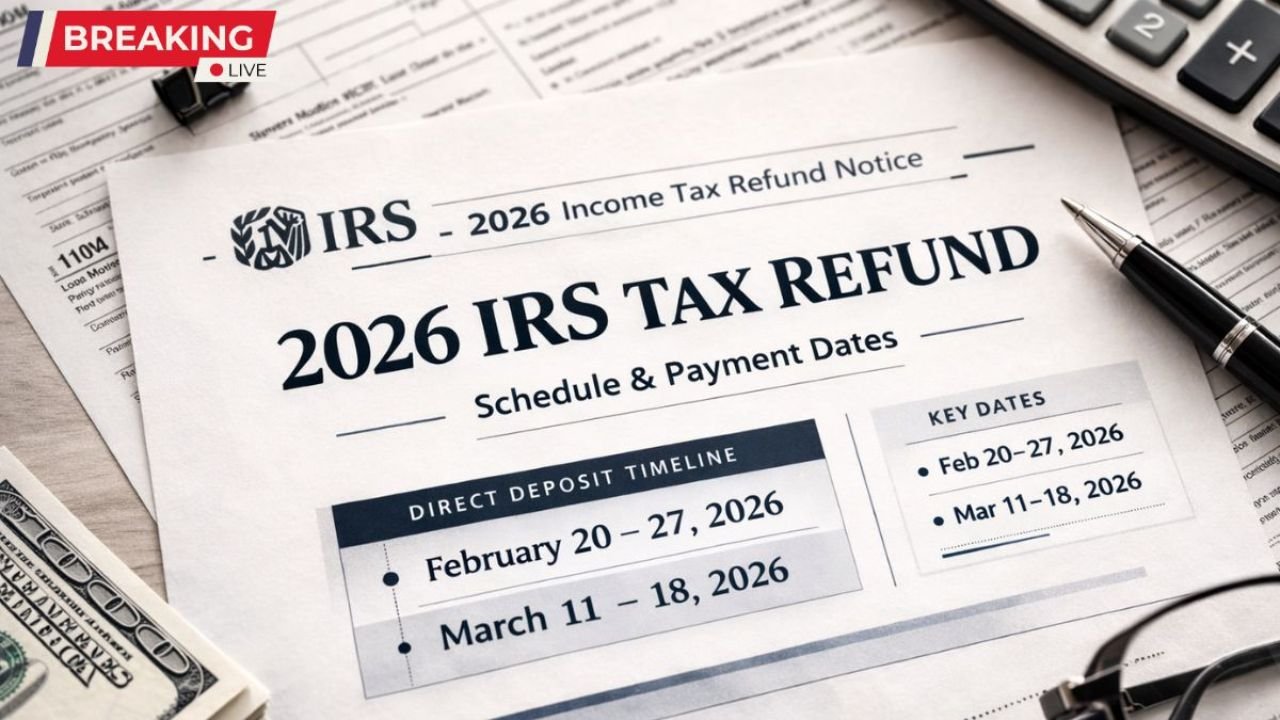
As the 2026 tax season progresses, millions of Americans who have already filed their 2025 federal income tax returns are now watching closely for their refunds. For many households, a tax refund is not a luxury — it is a strategic financial tool. It may be used to eliminate high-interest debt, stabilize monthly cash flow, invest in home improvements, or strengthen an emergency fund.
Because refunds are not issued on a single nationwide date, understanding how the system works can help you set realistic expectations and plan with confidence.
When Does the Refund Timeline Officially Begin?

The most important milestone in the refund process is the moment your return is officially accepted by the Internal Revenue Service (IRS).
Acceptance means the IRS has received your return and verified that it passed basic system checks, such as confirming Social Security numbers and required fields. This is when the processing timeline truly begins.
It does not begin on the day you press “submit” or mail your paperwork. If your return is rejected due to errors or missing information, the countdown does not start until those issues are corrected and the return is accepted.

Once accepted, your return enters the review phase.
What Happens During Processing?
After acceptance, the IRS system reviews several elements:
- Reported income and employer filings
- Tax withholding amounts
- Claimed deductions
- Refundable credits
- Identity verification markers
If everything aligns and no discrepancies are detected, the refund moves to approval and payment.

Most returns are processed automatically. However, some may require manual review if additional verification is needed.
Typical IRS Processing Time in 2026
For taxpayers who file electronically and request direct deposit, refunds are commonly issued within 21 days of acceptance.
This three-week timeframe is an estimate — not a guarantee.
Some refunds may arrive in 10–14 days. Others may take longer depending on complexity, verification requirements, or seasonal processing volume.
During peak filing weeks, even accurate returns may take slightly longer due to the high number of submissions.
Why Filing Method Significantly Impacts Speed
How you file plays a major role in how quickly your refund arrives.
Electronic Filing + Direct Deposit (Fastest Option)
This combination remains the most efficient method.
Electronic filing sends your information directly into IRS systems, allowing immediate automated checks. Direct deposit ensures that once approved, funds are transferred directly into your bank account without mailing delays.
Benefits include:
- Faster processing
- Fewer clerical errors
- Immediate confirmation of acceptance
- Reduced risk of lost payments
Paper Filing + Paper Check (Slowest Option)
Paper returns require manual handling. They must be opened, sorted, entered into IRS systems, and reviewed by staff. This adds days or weeks to the timeline.
Choosing a mailed paper check adds further delay due to printing and postal delivery.
For speed and reliability, digital filing with direct deposit is the clear premium choice.
Common Reasons Refunds Are Delayed
Delays are not uncommon and do not automatically indicate a serious issue. Here are the most frequent causes:
Data Entry Errors
Incorrect Social Security numbers, mismatched income statements, or wrong bank details can pause processing.
Missing Forms
Omitted schedules or incomplete documentation may trigger review.
Identity Verification
The IRS may request additional confirmation to prevent fraud.
Refundable Credit Review
Certain credits require additional scrutiny to ensure eligibility.
Amended Returns
If you file corrections after submission, expect a longer timeline.
These safeguards are designed to protect taxpayers and ensure accuracy, but they can extend the standard 21-day estimate.
How to Track Your 2026 Tax Refund
The IRS provides an official online tracking system that allows taxpayers to monitor refund status.
The tool generally shows three stages:
- Return Received
- Refund Approved
- Refund Sent
Updates are typically made once per day. Checking repeatedly will not accelerate processing.
It is best to rely only on official IRS tools for accurate updates. Unverified websites and viral posts often publish generalized “refund calendars” that may not apply to your individual situation.
Managing Financial Expectations During Tax Season
Because refund timing varies from person to person, it is wise to avoid scheduling essential payments around an assumed deposit date.
If your refund is earmarked for important expenses such as rent, tuition, or debt repayment, consider building flexibility into your financial plan.
A refund should complement your financial strategy — not become the sole solution for urgent obligations.
Smart Uses for Your 2026 Tax Refund
For financially strategic households, a refund presents an opportunity to strengthen long-term stability.
Consider allocating your refund toward:
- Paying down high-interest credit cards
- Building or expanding an emergency fund
- Investing in retirement accounts
- Funding education or certifications
- Upgrading essential work-from-home technology
Using your refund with intention can create lasting financial resilience.
Final Thoughts
The 2026 tax refund schedule is not based on a single national payout date. Instead, your timeline depends on when your return is accepted, how you file, and whether additional review is required.
For most electronic filers who choose direct deposit, refunds are issued within approximately three weeks of acceptance. However, individual circumstances can influence the final timing.
Filing accurately, choosing electronic submission, and monitoring your status through official IRS tools remain the most effective ways to ensure a smooth refund experience.
Disclaimer:
This article is for informational purposes only and does not provide legal, tax, or financial advice. Refund timelines depend on individual tax situations and official IRS procedures. For personalized guidance, consult official IRS resources or a qualified tax professional.